Free Government iPhone in Illinois: Safe Lifeline, EBT, and Medicaid Options
Illinois residents can check free or discounted phone options through Lifeline-related provider offers, but there is no guaranteed federal program that gives every eligible person a free iPhone. This page explains what is realistic, what to check first, and how to avoid fake “government iPhone” claims.
Quick answer for Illinois
Lifeline is still active. ACP ended, and households stopped receiving ACP discounts after June 1, 2024. SNAP through the Illinois Link Card, Medicaid through Illinois HFS, SSI, income eligibility, housing assistance, veterans benefits, or qualifying Tribal programs may help prove Lifeline eligibility. An iPhone, however, depends on the provider, ZIP code, stock, fees, shipping rules, and device condition.
Lifeline Free iPhone is independent and informational only. We do not provide phones, collect applications, or represent a government agency.
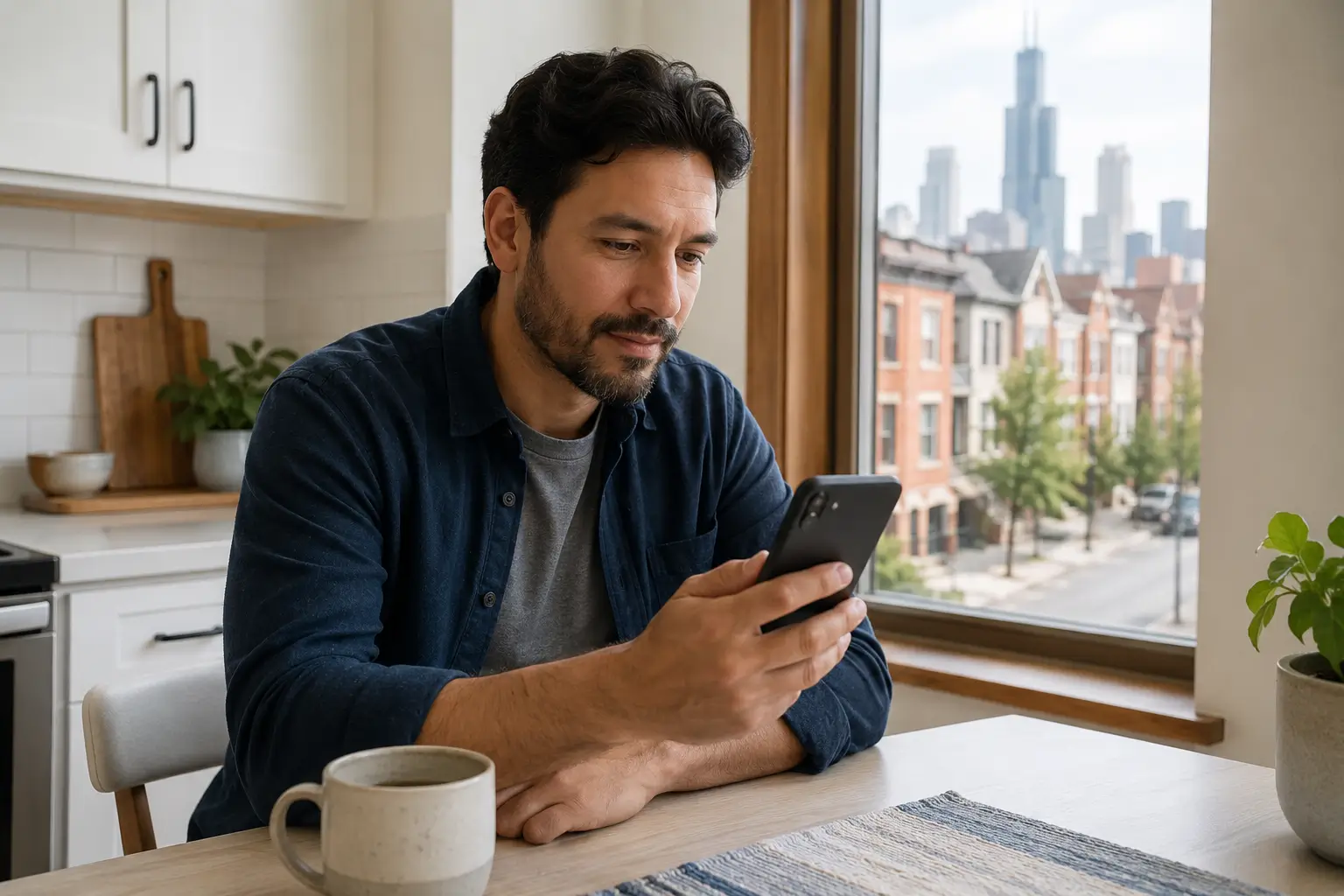
Chicago, Rockford, Springfield, rural counties, and Southern Illinois may show different Lifeline provider options.
Quick Answer for Illinois Residents
A “free government iPhone in Illinois” usually means a Lifeline-related phone offer from a participating provider, not a direct iPhone giveaway from the State of Illinois or the federal government. Lifeline can reduce the cost of phone, internet, or bundled service for eligible households. Some providers may include a free or discounted smartphone with service, but iPhones are not guaranteed.
If you have SNAP through the Illinois Link Card, Medicaid, SSI, FPHA or Section 8, Veterans Pension, Survivors Benefit, qualifying Tribal benefits, or income at or below Lifeline limits, you may be able to prove eligibility. The next step is checking official Lifeline eligibility and then comparing providers by Illinois ZIP code.
Important Illinois safety note
Do not pay a random person online for “guaranteed iPhone approval.” Do not share your Illinois Link Card PIN, banking details, full card number, or private benefit login. Real Lifeline checks should not require your EBT PIN.
What “Free Government iPhone” Means in 2026
The phrase sounds simple, but the real program structure is more limited. Lifeline is a federal benefit for eligible low-income households. Its main purpose is to lower monthly phone or internet service costs. It is not an Apple device program.
Some Lifeline providers may advertise free smartphones, discounted smartphones, refurbished devices, or limited iPhone promotions. Those offers can change by ZIP code, inventory, activation rules, shipping policies, copay requirements, and whether the provider serves your area.
In many Illinois ZIP codes, Android phones are more common than iPhones. That does not mean the offer is bad. It means the provider is offering a practical smartphone with Lifeline-supported service, while iPhone stock may be limited or unavailable.
Realistic device expectations
- Lifeline helps with phone or internet service first.
- iPhone offers are provider-specific, not guaranteed.
- Refurbished iPhones may appear in some promotions.
- Android smartphones may be the default free device.
- Activation, shipping, and copay rules can vary.
- ZIP-code availability can change inside Illinois.
Does Illinois Have a Free iPhone Program?
There is no verified official statewide program in Illinois that guarantees a free iPhone to every eligible resident. Illinois residents should treat any website, social media page, or agent promising a guaranteed government iPhone as a warning sign.
Safe alternatives still exist. You can check Lifeline providers, look for free or discounted smartphone offers, use SNAP or Medicaid documents to prove eligibility when accepted, and compare phone service choices by ZIP code.
Illinois residents can also use local access resources when phone or internet access is difficult. Public libraries, the Illinois Office of Broadband, community action agencies, and assistive technology resources may help residents find internet access, digital help, or support for disability-related technology needs.
Main Ways Illinois Residents May Qualify
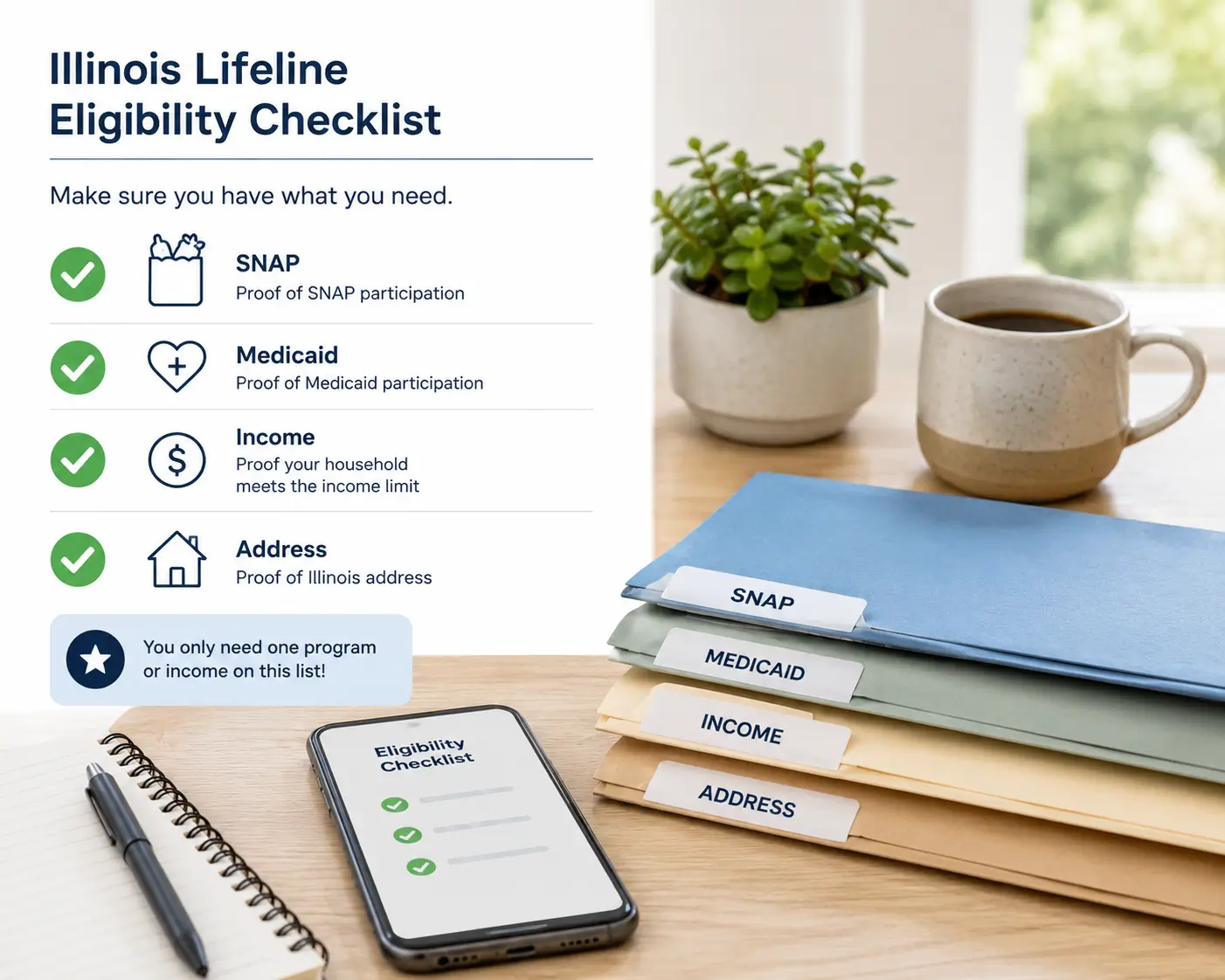
Lifeline eligibility is usually based on a qualifying program or household income. Only one Lifeline benefit is generally allowed per household, not per person. If someone else at your address already receives Lifeline, you may need to complete a household worksheet or show that you are a separate economic household.
| Eligibility route | Illinois example | How it helps | Important limit |
|---|---|---|---|
| SNAP / EBT | Illinois Link Card through IDHS | Can help prove Lifeline program eligibility. | SNAP does not guarantee an iPhone. |
| Medicaid | Illinois Medicaid through HFS | Can help prove Lifeline program eligibility. | Provider offers still depend on ZIP code and stock. |
| SSI | Supplemental Security Income | Can qualify a household for Lifeline. | Identity and address may still need verification. |
| Income | Household income at or below Lifeline limits | Can qualify even without SNAP or Medicaid. | Income documents must usually be current and clear. |
| FPHA / Section 8 | Federal Public Housing Assistance | Can be a qualifying program route. | Benefit proof must match the applicant. |
| Veterans benefits | Veterans Pension or Survivors Benefit | Can support Lifeline eligibility. | Not every VA-related benefit is the same program. |
| Tribal programs | Qualifying Tribal assistance where applicable | May support Lifeline eligibility and Tribal benefit rules. | Rules depend on qualifying Tribal lands and documents. |
EBT and SNAP Free iPhone Options in Illinois
Illinois SNAP households usually access benefits through the Illinois Link Card. SNAP is handled by the Illinois Department of Human Services, and many residents use ABE to apply for SNAP, cash, or medical assistance.
If you receive SNAP, your Illinois Link Card or benefit letter may help prove Lifeline eligibility. That proof does not mean an iPhone is automatic. It only helps show that you may qualify for Lifeline service. The provider decides what phone offers are available in your ZIP code.
Common Illinois document problems include an old address on the benefits account, a different name on the phone application, missing benefit dates, or a screenshot that does not clearly show the program name and applicant name.
For a focused EBT path, read our free iPhone with EBT guide.
Illinois Link Card safety tips
- Never share your EBT PIN with a phone agent.
- Do not send a photo showing sensitive card details.
- Use an official benefit letter or accepted portal screenshot when requested.
- Make sure your name and address match your Lifeline application.
- Check provider terms before paying any device-related fee.
Medicaid Free iPhone Options in Illinois
Illinois Medicaid is administered by the Illinois Department of Healthcare and Family Services. Medicaid participation can help prove Lifeline eligibility, but it does not create a guaranteed iPhone offer.
A provider or verifier may ask for an approval letter, benefits letter, managed care document, or accepted account screenshot. The document should show your name, the program, the issuing agency or plan, and a current issue date or active coverage period.
Medicaid households in Chicago, Rockford, Springfield, Peoria, Metro East, and rural counties may see different provider options because Lifeline company availability is checked by location. One ZIP code may show several companies, while another may show fewer device promotions.
Lifeline iPhone and Free Phone Options in Illinois
Lifeline is the main program Illinois residents should understand. The National Verifier checks eligibility in most states, USAC administers Lifeline support functions, and the FCC oversees the program. After eligibility, users still need to choose a company that serves their area.
The cleanest path is simple: confirm eligibility, use official Lifeline steps, search companies by ZIP code, and then compare provider terms. If a provider claims “iPhone,” read the device condition, model wording, activation cost, shipping cost, service plan, recertification rules, and return policy.
Provider check tip
Use our Lifeline provider comparison page to understand what to compare before visiting a provider site. For official company lookup, use USAC Companies Near Me in the external resources section.
Phone and Internet Access Issues Across Illinois
Illinois is not one simple phone market. Residents in Chicago, Aurora, Naperville, Joliet, Rockford, Springfield, Peoria, Elgin, Waukegan, Champaign, Bloomington-Normal, Decatur, Cicero, Schaumburg, East St. Louis, and the Quad Cities may see different provider options because Lifeline availability is checked by ZIP code.
Large metro areas may show more companies or faster shipping, but an iPhone still is not guaranteed. Rural western Illinois, Southern Illinois, agricultural counties, river communities near the Mississippi and Ohio, and smaller towns may have fewer provider choices or more coverage questions.
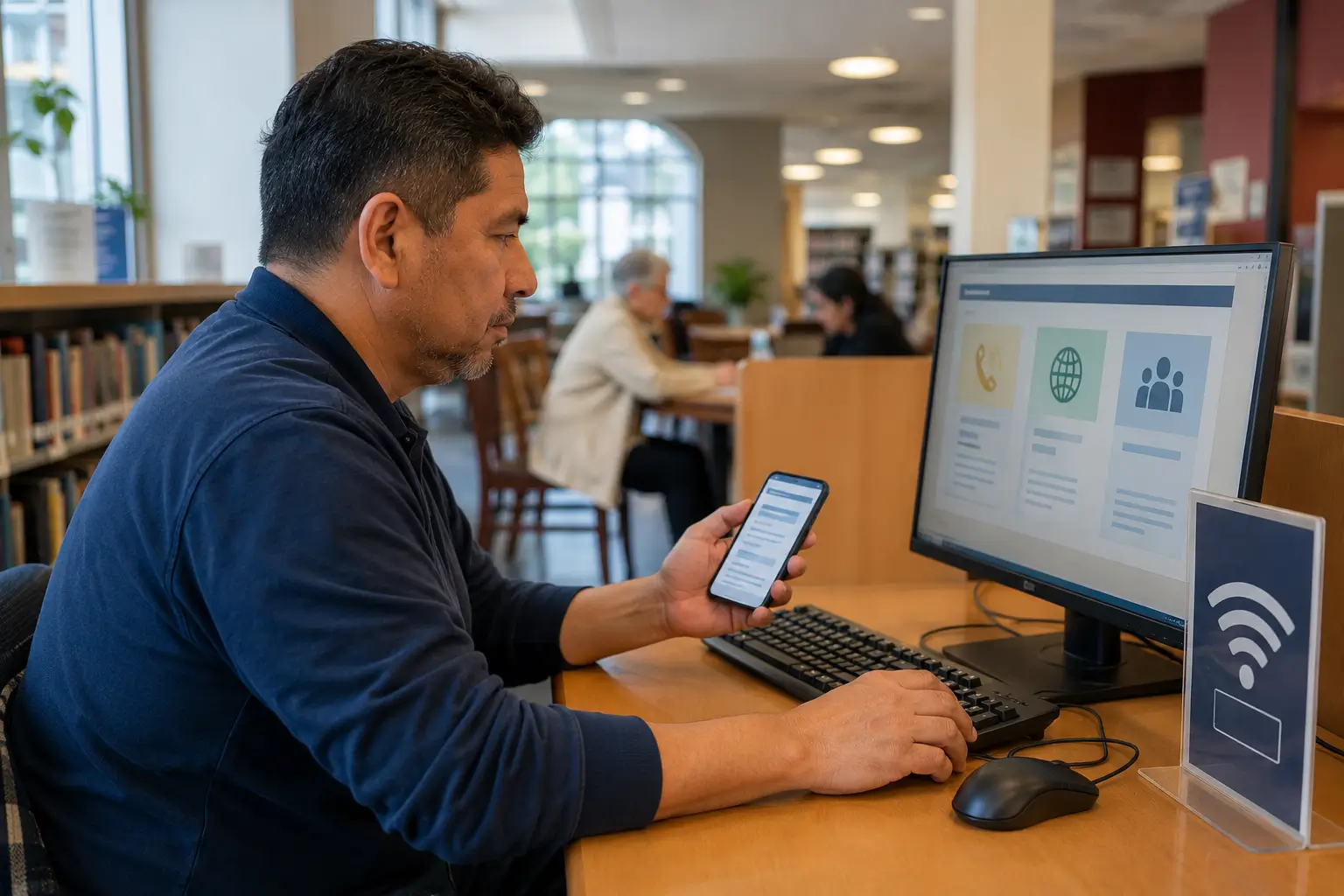
The Illinois Office of Broadband and DCEO broadband maps can help residents understand internet access conditions. Public libraries can also be practical places to use Wi-Fi, print documents, check benefit portals, or compare phone providers safely.
For people with disabilities or health conditions, the Illinois Assistive Technology Program may help with assistive technology information, device demonstrations, device loans, or reuse resources. Community action agencies can also help connect low-income households with local services such as food, utility help, housing support, and other assistance.
Safe Path to Check Lifeline iPhone Options in Illinois
Use this path before trusting any “free iPhone today” claim. It keeps the process focused on eligibility, official verification, ZIP-code provider checks, and scam prevention.
Confirm eligibility
Check SNAP, Illinois Link Card, Medicaid, SSI, income, housing, veterans, or qualifying Tribal eligibility.
Use official routes
Review Lifeline Support or National Verifier steps before giving information to any provider.
Search by ZIP code
Provider lists can change between Chicago neighborhoods, suburbs, smaller towns, and rural counties.
Compare device terms
Check iPhone stock, Android backup phones, 5G support, refurbished condition, fees, shipping, and plan terms.
Apply safely
Use a real provider channel or official Lifeline route. Do not rely on random social media agents.
Avoid scams
Reject fake government logos, ACP claims after June 1, 2024, EBT PIN requests, and “pay first” approval claims.
Documents You May Need
Some Illinois applicants are verified automatically. Others may need to upload proof. The safest move is to gather clean documents before starting. Do not send sensitive documents to random people through social media messages.
| Document type | Examples | Illinois problem to watch | Safe tip |
|---|---|---|---|
| Identity proof | State ID, driver’s license, passport, government ID | Name spelling differs from benefit account. | Use a document with your current legal name. |
| Address proof | Utility bill, lease, mortgage statement, official mail | Benefit account shows an old Illinois address. | Update benefit records before applying if needed. |
| SNAP proof | Illinois Link Card benefit letter or accepted ABE screenshot | Screenshot hides program name or date. | Show name, program, agency, and current status. |
| Medicaid proof | HFS Medicaid letter, managed care document, active coverage proof | Plan card alone may not show enough details. | Use an approval or coverage letter when possible. |
| Income proof | Tax return, pay stubs, benefit statement, unemployment proof | Income proof does not cover the needed period. | Use current documents with clear dates. |
| Household worksheet | Required when another Lifeline user may be at the same address | Shared apartments or family homes can trigger extra checks. | Answer household questions honestly. |
| Tribal documents | Tribal ID or qualifying Tribal program proof where relevant | Tribal address or eligibility details may need extra clarity. | Use official Tribal documentation if requested. |
For a fuller step-by-step path, see how to apply for Lifeline phone options.
Apply Now in Illinois, Safe Guided Path
This is not a real application form. Lifeline Free iPhone does not collect SSNs, EBT card numbers, EBT PINs, dates of birth, phone numbers, full addresses, or banking details. Use this section as a safe pre-check before visiting official Lifeline or provider pages.
1. Eligibility pre-check
You may qualify through Illinois Link Card SNAP, Medicaid, SSI, income, housing assistance, veterans benefits, Survivors Benefit, or qualifying Tribal programs. Eligibility does not guarantee a specific iPhone model.
2. Document readiness
Make sure your name, address, benefit proof, and dates are clear. If you recently moved from Chicago to another Illinois city, update your records before applying.
3. ZIP code provider check
Compare companies by ZIP code. A provider available in Joliet may not show the same offer in rural Southern Illinois or the Quad Cities.
4. Device expectation check
Look for phone type, iPhone model wording, refurbished condition, activation, shipping, taxes, copay, data limits, and service rules.
5. EBT path
If SNAP is your strongest proof, read the EBT phone guide before you apply.
6. Senior path
Seniors should compare simple phone setup, customer support, coverage, and document steps. See our senior phone guide.
Provider Availability and ZIP Code Checks
ZIP code is one of the biggest factors in Illinois. A provider may serve one part of Cook County but show different offers in Will County, Winnebago County, Sangamon County, Peoria County, Champaign County, Madison County, or rural counties farther south.
Compare monthly service, talk and text, data amount, hotspot rules, 5G availability, activation fees, shipping fees, device condition, upgrade options, and recertification rules. If an offer mentions an iPhone, read whether it says new, refurbished, pre-owned, limited stock, subject to availability, or discounted with payment.
Some users ask about specific providers such as AirTalk Wireless or Assurance Wireless. Provider participation, phone inventory, and state availability can change, so always check current terms before applying.
What To Do If No iPhone Offer Is Available
If you qualify for Lifeline but cannot find an iPhone offer in your Illinois ZIP code, you still have useful options. The goal is reliable communication first, then device preference second.
Practical alternatives
- Accept Lifeline phone service first if it solves an urgent need.
- Compare Android smartphone offers from participating providers.
- Check free 5G government phone options.
- Buy a low-cost refurbished iPhone separately if the provider allows BYOD.
- Use library Wi-Fi or computers to check official resources.
Local Illinois support ideas
- Check Illinois broadband and digital equity resources.
- Contact a local community action agency for nearby help.
- Ask a public library about internet access and printing.
- Check IATP if the need is disability-related.
- Avoid paying suspicious “approval” or “release” fees.
Special Groups in Illinois
Seniors
Illinois seniors should focus on coverage, simple setup, customer support, and clear billing. A basic Android phone with reliable service may be more useful than chasing an unavailable iPhone. See options for seniors.
Families with EBT
SNAP participation through the Illinois Link Card can help prove eligibility, but it is not a phone order by itself. Keep benefit proof current and protect your EBT PIN.
Medicaid households
Medicaid proof may help with Lifeline eligibility. Use documents that show active coverage and match the applicant’s name and address.
Rural residents
Rural western Illinois, Southern Illinois, and small agricultural communities may have fewer providers or weaker coverage. Always compare service coverage before device promises.
Veterans
Veterans Pension or Survivors Benefit can be a qualifying route. Keep the official benefit document ready if the verifier asks for proof.
People with disabilities
If the issue is accessibility, assistive technology, or device usability, IATP may be a helpful Illinois resource alongside Lifeline service options.
Scam Warnings for Illinois Residents
Phone assistance searches attract fake websites and social media sellers. Illinois residents should be extra careful with pages that sound official but hide who runs them.
Red flags
- “Guaranteed free iPhone today” claims.
- Fake government seals or fake official approval badges.
- ACP discount claims after ACP ended on June 1, 2024.
- Requests for Illinois Link Card PIN or full EBT card details.
- Requests for bank cards, payment apps, or “approval release” fees.
- Social media-only sellers with no real provider website.
- WhatsApp or Telegram-only agents.
- Fake tracking numbers before any real application exists.
- Fake iPhone 13 guarantee pages with no provider terms.
- Copied provider names with slightly misspelled domains.
- Sites that hide contact information, terms, or privacy details.
If you’re checking model-specific claims, read our free iPhone 13 expectations guide before trusting any exact-model promise.
Helpful Checklist Before You Apply
- Confirm whether you qualify through SNAP, Medicaid, SSI, income, housing, veterans, survivors, or Tribal assistance.
- Check whether anyone else in your household already receives Lifeline.
- Gather identity, address, benefit, and income documents before starting.
- Make sure your name and Illinois address match across documents.
- Compare providers by ZIP code, not just by state name.
- Read device terms before believing an iPhone claim.
- Accept that Android phones may be more common than iPhones.
- Protect your EBT PIN, benefit login, and banking details.
- Save confirmation emails or application reference numbers.
- Watch for annual recertification or provider follow-up notices.
FAQs About Free Government iPhones in Illinois
Can I get a free government iPhone in Illinois?
Maybe, but it is not guaranteed. Illinois residents may qualify for Lifeline service through SNAP, Medicaid, income, SSI, housing assistance, veterans benefits, or other qualifying routes. Any iPhone offer depends on the provider, ZIP code, stock, fees, and device terms.
Does the Illinois Link Card qualify me for a free iPhone?
The Illinois Link Card can help prove SNAP participation for Lifeline eligibility, but it does not guarantee an iPhone. It may help you qualify for Lifeline service, then you must compare provider device offers.
Can Illinois Medicaid help me get a Lifeline phone?
Yes, Medicaid participation can be a Lifeline qualifying route. Illinois Medicaid proof may help verify eligibility, but the phone type still depends on provider availability and current device inventory.
Is Lifeline still active in Illinois after ACP ended?
Yes. Lifeline is still active. ACP ended due to lack of additional funding, and households stopped receiving ACP discounts after June 1, 2024. Lifeline is separate from ACP.
Is there a guaranteed iPhone program from the Illinois government?
No verified statewide Illinois program guarantees a free iPhone to every eligible resident. Be careful with websites or agents that make that promise.
What if my provider only offers Android phones in Illinois?
That is common. Android smartphones may be easier to find through Lifeline provider offers. If service is urgent, an Android phone may be the practical choice while you compare other options.
Can seniors in Illinois get a free iPhone through Lifeline?
Seniors may qualify for Lifeline through income, Medicaid, SSI, SNAP, housing assistance, or other eligible programs. A senior’s iPhone offer is not guaranteed and depends on provider terms.
Do rural Illinois residents have fewer phone options?
Some rural areas may show fewer Lifeline companies or different device offers than large metro areas. Always check by ZIP code and compare coverage before focusing on the phone model.
Are Chicago and Aurora provider options the same?
Not always. Provider availability can vary by ZIP code, even between Chicago, Aurora, Naperville, Joliet, Rockford, and nearby suburbs.
What documents do Illinois applicants usually need?
You may need proof of identity, address, benefit participation, income, or household status. Illinois SNAP users may use accepted proof connected to the Illinois Link Card or ABE, while Medicaid users may need HFS or coverage documents.
Should I pay a fee to unlock free iPhone approval?
No. Be careful with “pay first” claims. Real providers may have legitimate shipping, activation, or device costs, but random approval fees from social media agents are a warning sign.
Can I apply on this website?
No. Lifeline Free iPhone is an independent informational site. We do not collect applications, SSNs, EBT PINs, card numbers, or banking details. Use official Lifeline or provider channels when you apply.
Final Helpful Summary
Illinois residents can safely check Lifeline phone and smartphone options, but a free iPhone is never something to assume. SNAP through the Illinois Link Card, Medicaid, SSI, income eligibility, housing assistance, veterans benefits, or qualifying Tribal programs may help prove Lifeline eligibility. The device offer depends on provider rules, ZIP code, stock, fees, and shipping.
Start with eligibility, gather clean documents, compare providers by ZIP code, read the device terms, and avoid anyone asking for your EBT PIN or a suspicious approval fee.
External Resources
Use official sources when checking eligibility, documents, state benefits, or provider availability.